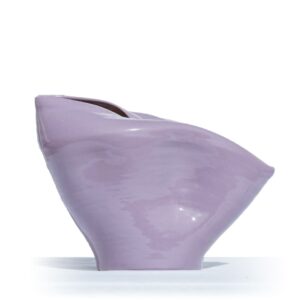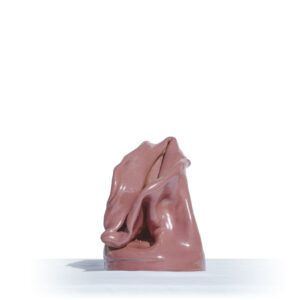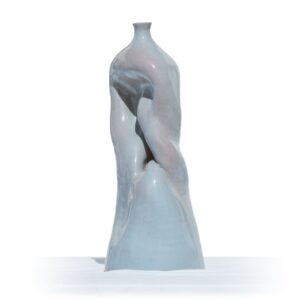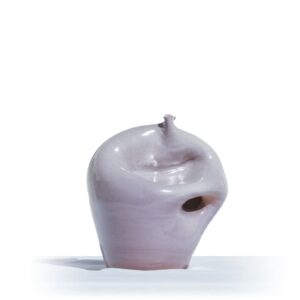
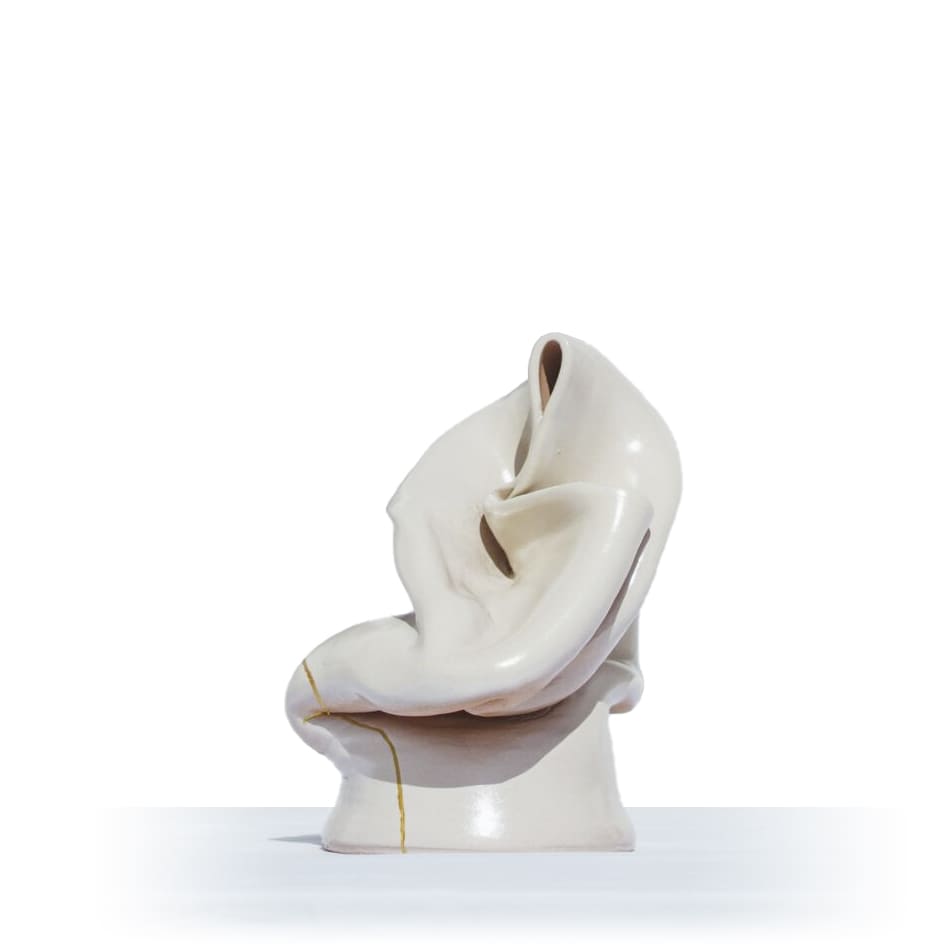
Material: Terracotta
Color: Pink ivory
Special finish: Cold-applied gold intervention inspired by Japanese Kintsugi
Dimensions: 30 × 18 cm
Weight: 4.4 kg
Technique: Wheel-thrown, hand-altered and hand-modelled
Pietà is a ceramic sculpture built around the gesture of holding. Wheel-thrown in Mediterranean terracotta and altered by hand while the clay remained plastic, the form folds inward, creating the impression of one body sheltering another within its own volume.
The title inevitably evokes Michelangelo’s Pietà, not through direct representation, but through a shared emotional structure: weight supported by tenderness, vulnerability held by another body, and the transformation of grief into stillness. Here, the reference is reduced to its essential gesture. There is no figure, no narrative scene—only a sculptural body organised around protection, fragility and care.
The work gained an additional layer during firing, when a fracture appeared in the ceramic body. Rather than concealing the break, it was incorporated into the final sculpture through a cold-applied gold intervention inspired by the Japanese art of Kintsugi. The repair does not attempt to erase the wound. It makes it visible.
This intervention shifts the meaning of the piece. The fracture becomes part of its history and of its visual structure: a record of pressure, transformation and survival within the material itself. The golden line introduces a deliberate tension between damage and value, vulnerability and permanence.
A custom pink-ivory glaze softens the surface and reinforces the intimate character of the sculpture. Its restrained luminosity contrasts with the gold intervention, allowing the fracture to emerge without dominating the form.
In Pietà, fragility is not treated as failure. The broken and repaired surface becomes inseparable from the work’s identity, turning an event produced by fire into a meditation on care, endurance and the beauty of what has been altered but not destroyed.