El Taller
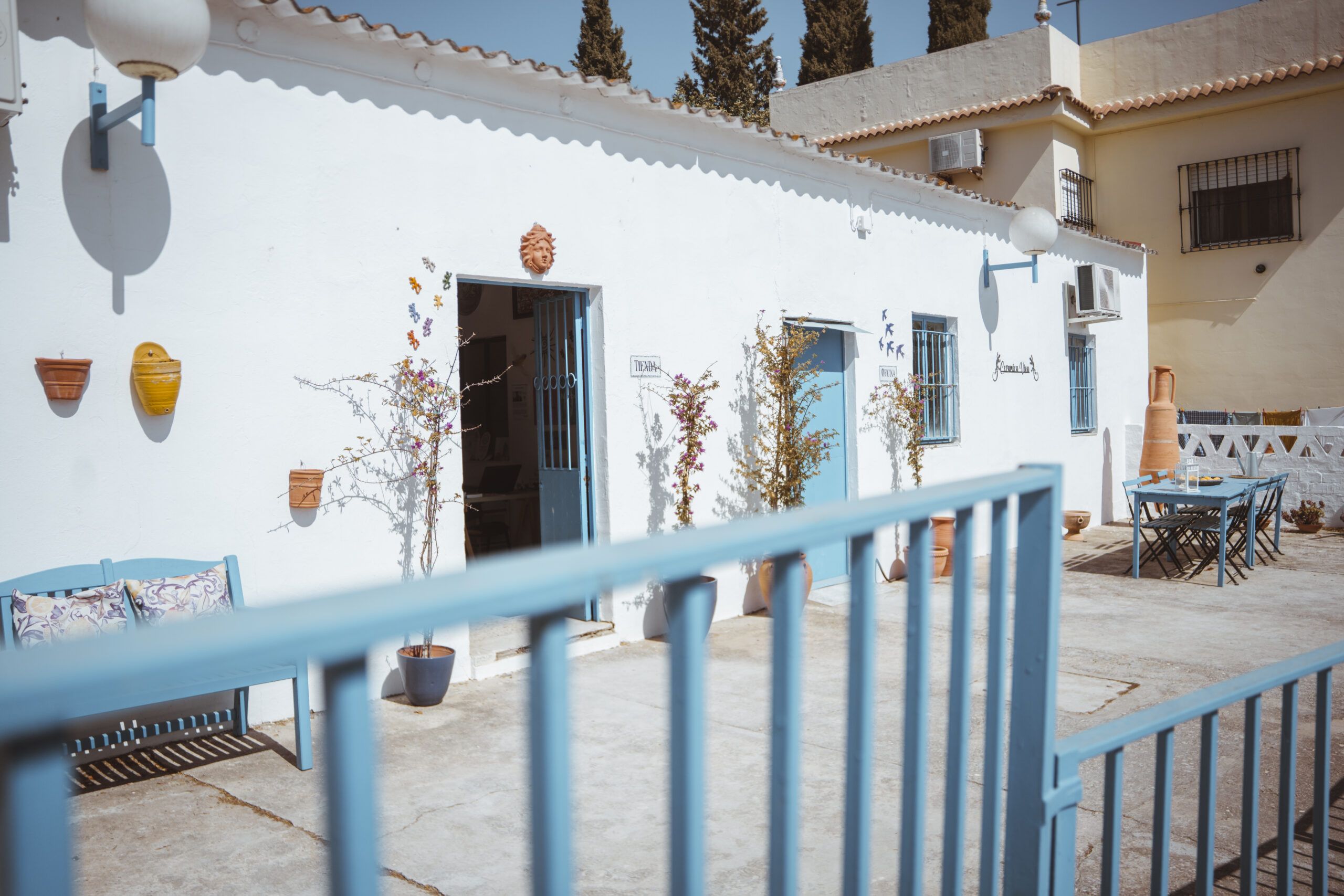
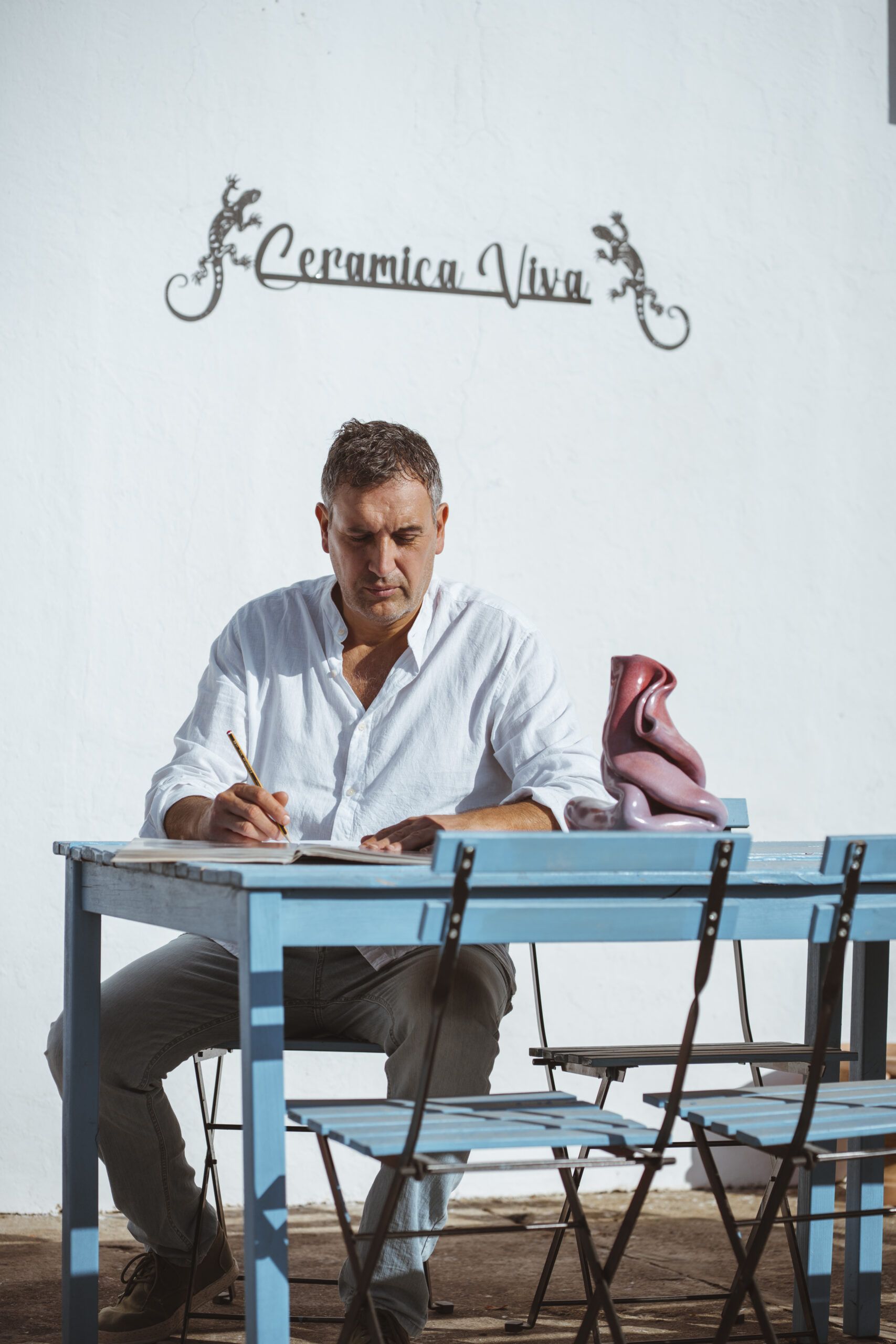
Ubicado en una antigua fábrica de cerámica en el sur de Sevilla, mi taller es mucho más que un espacio de trabajo: es el lugar donde la tradición alfarera y la creación contemporánea dialogan a través del barro. Aquí, cada pieza nace de un proceso artesanal pausado, guiado por el torno, la intuición y una profunda conexión con la materia.
La luz mediterránea, el silencio del oficio y el respeto por los tiempos naturales de la cerámica forman parte de la esencia del taller. Desde la selección de las arcillas hasta las fases de modelado, secado y cocción, cada obra se desarrolla íntegramente en este espacio, donde la técnica se pone al servicio de la expresión artística.
El taller es también un laboratorio de experimentación; donde todo sucede A partir de formas creadas en el torno alfarero, las piezas evolucionan mediante procesos de deformación plástica y trabajo manual, dando lugar a volúmenes orgánicos, escultóricos y únicos. Ninguna obra es exactamente igual a otra; cada una conserva la huella del gesto, la textura del proceso y la belleza de lo irrepetible.
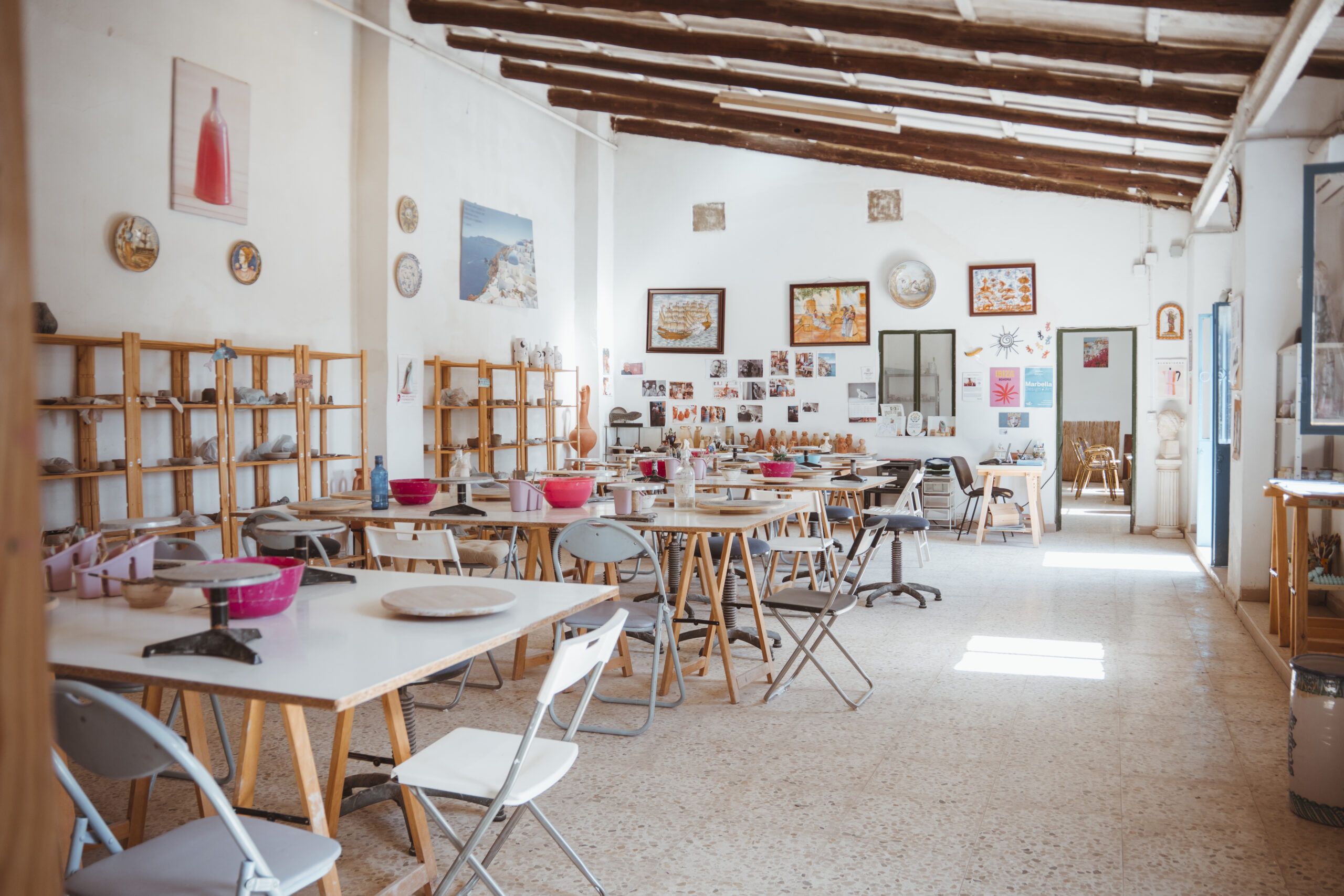
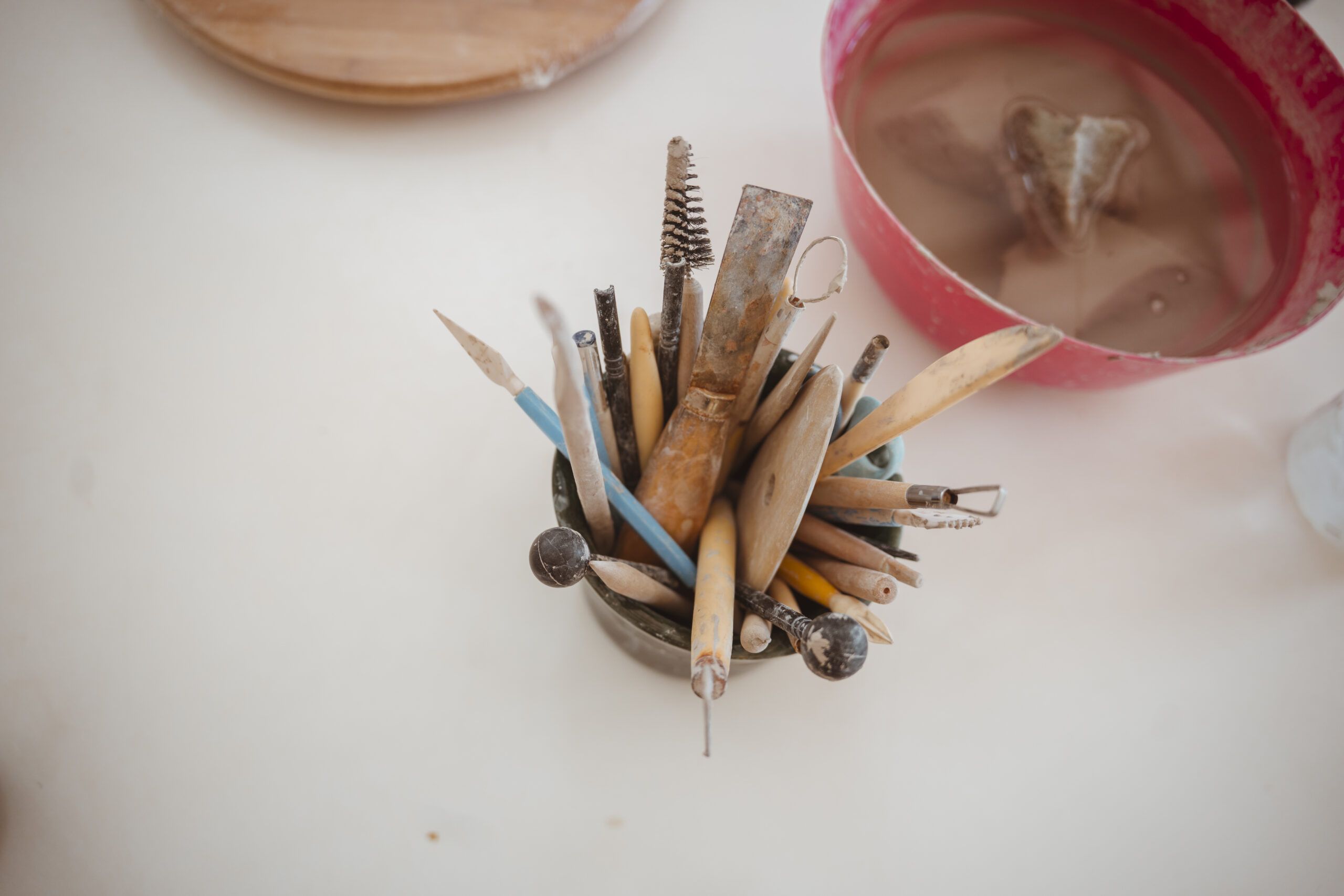
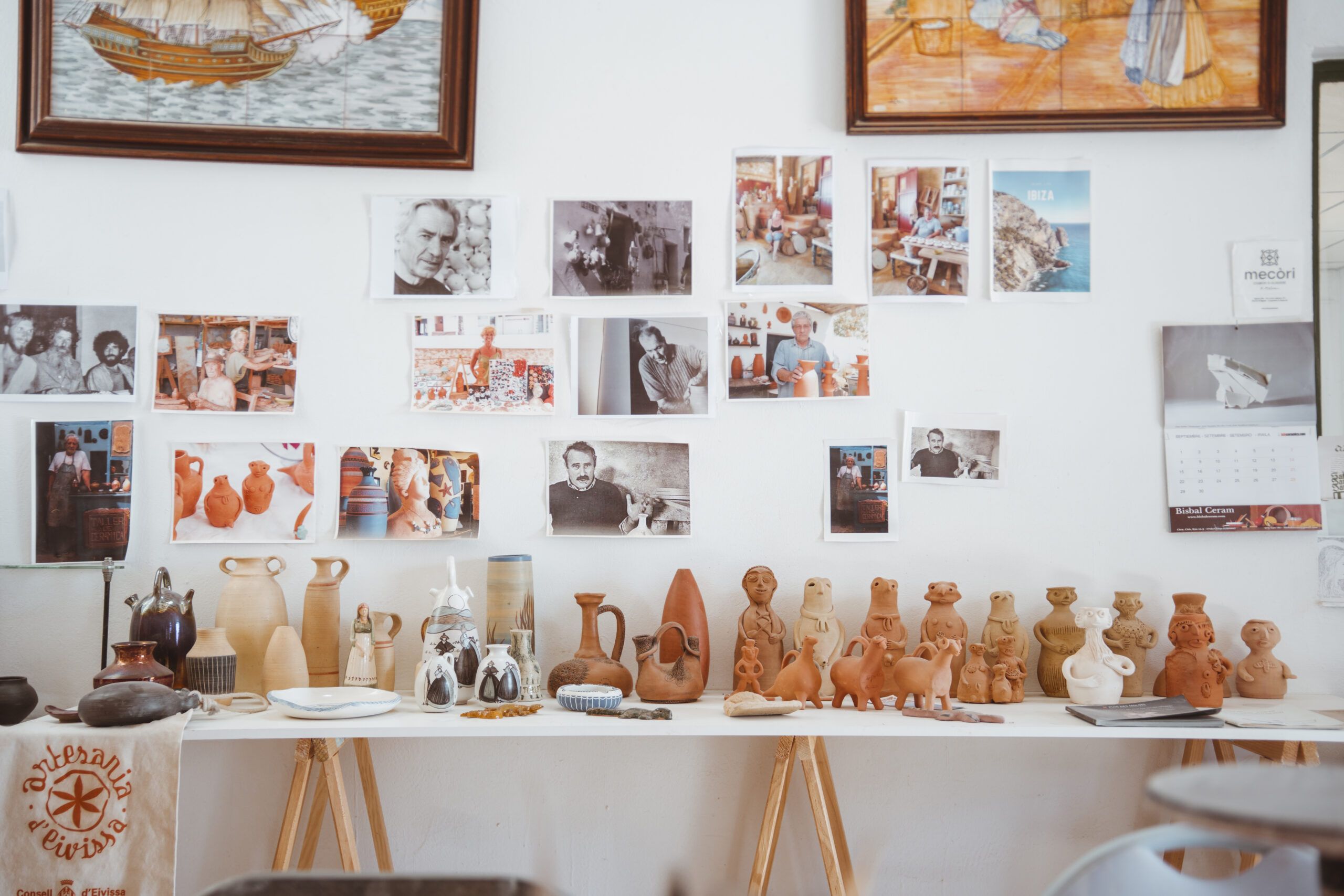
Entre estanterías repletas de piezas en distintas etapas de creación, herramientas tradicionales y hornos cerámicos, el taller mantiene vivo un oficio ancestral desde una mirada contemporánea. Es un espacio donde la artesanía, el diseño y el arte se encuentran para transformar la arcilla en obras con identidad propia y alma mediterránea.
La Escuela
Aprender cerámica es aprender a habitar el presente
Más que una escuela: un espacio para crear, sentir y transformar.
Desde mi taller en Sevilla, dirijo la Escuela Cerámica Viva, un proyecto formativo donde la enseñanza va más allá de la técnica. Aquí, el aprendizaje se convierte en experiencia: una conexión real entre el cuerpo, la mente y el barro.
Inspirada en mi propia práctica artística, esta escuela apuesta por una cerámica artesanal hecha desde la conciencia y la emoción. Se trabajan formas orgánicas, la exploración del error como camino creativo y la belleza de lo imperfecto.
En cada clase comparto mi visión del arte en cerámica contemporánea, guiando a los alumnos a encontrar su propia voz a través del gesto, la repetición y la materia.
Donde El Barro Te Escucha
La escuela como espacio de presencia: crear desde las manos, el silencio y la materia